The Manufacturing

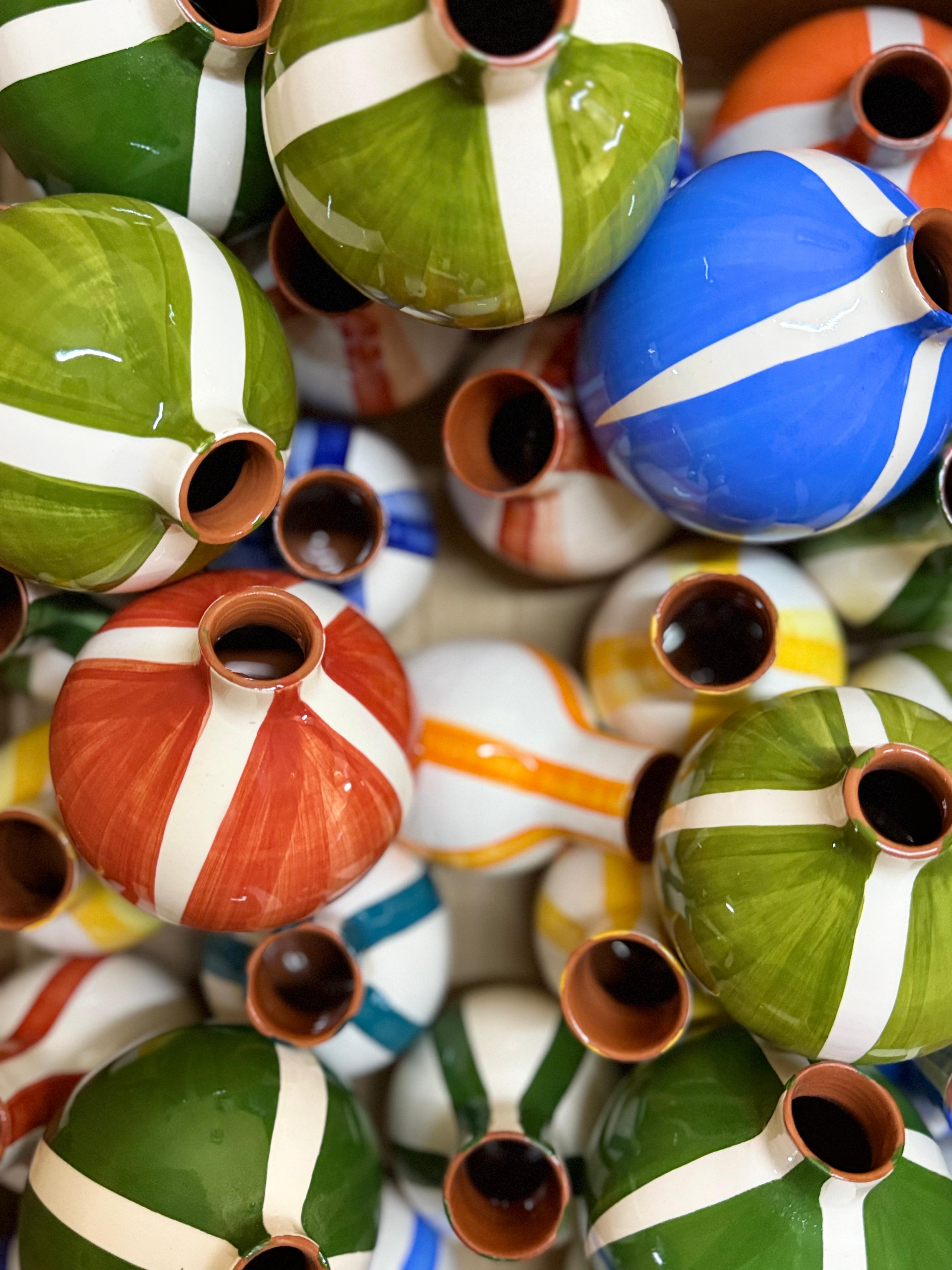
In our family workshops based in central Portugal, each ceramic piece is entirely handmade, reflecting a deep respect for craftsmanship and tradition. Every stage of the process, from shaping the clay to the final finishing touches, is carried out with care and precision, ensuring that each object is unique.

Nélia Patalim® and Antonio Janeiro are at the heart of this creative process. Alongside designing traditional patterns inspired by Portuguese heritage, they also develop timeless collections characterized by modern, minimalist decoration. Their work bridges past and present, combining cultural identity with contemporary aesthetics.

They place great importance on maintaining production methods rooted in ancestral techniques, preserving the knowledge passed down through generations. At the same time, they are committed to a sustainable and fair approach to craftsmanship, favoring responsible use of materials and ethical working practices.

Through this philosophy, each piece embodies not only artistic expression but also a conscious and respectful way of creating.

Credits : alojadaceramica

#1 - Shaping

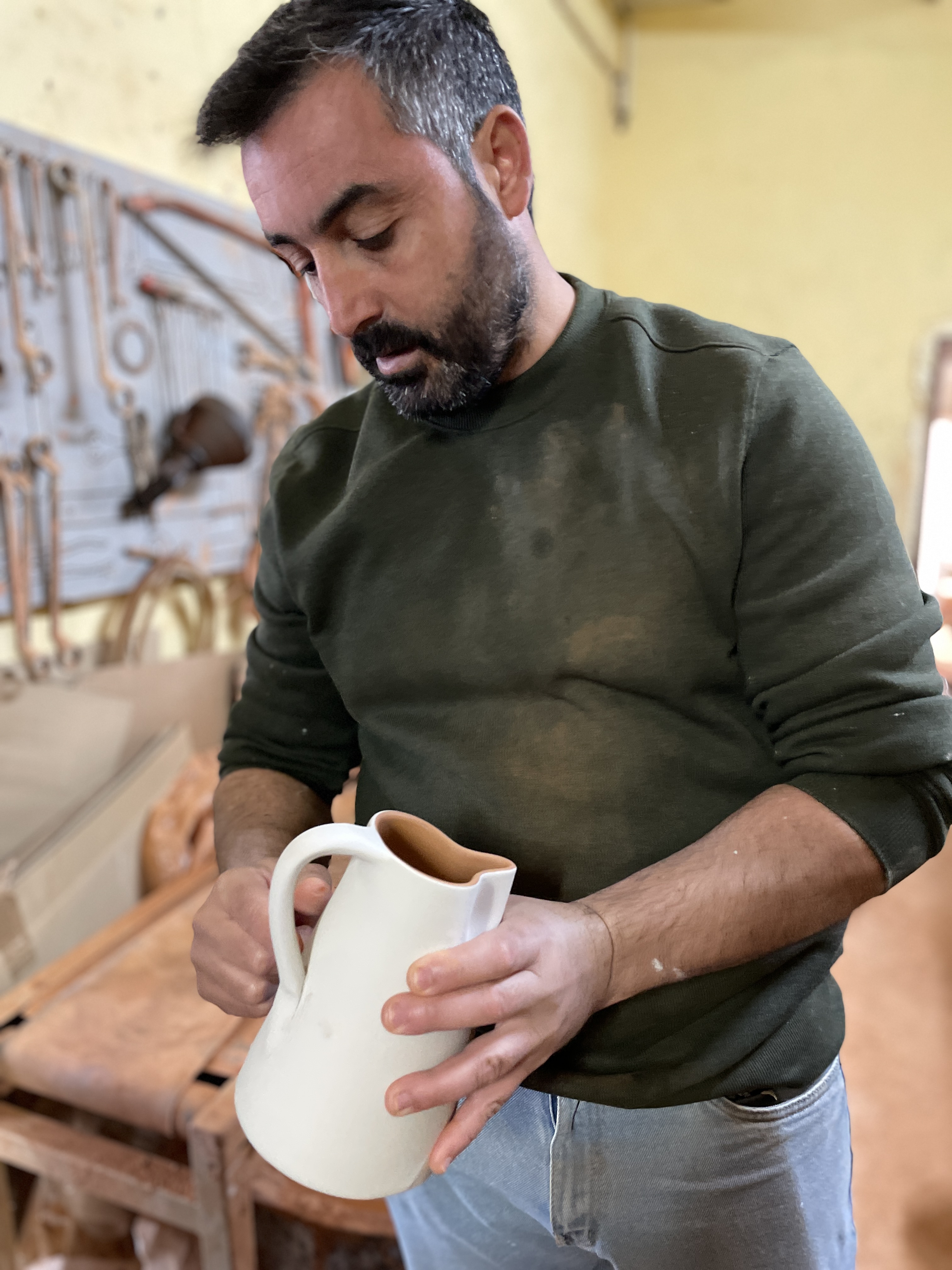
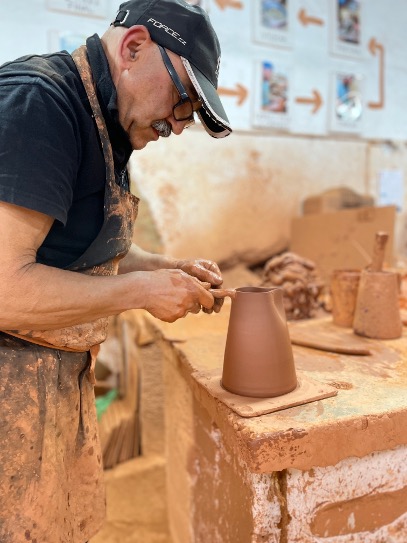
The creation of handmade ceramic pieces on a potter’s wheel is a precise and tactile process that combines technical skill with artistic expression. It begins with preparing the clay, which is wedged to remove air bubbles and ensure an even, workable consistency.

The clay is then centered on the wheel, a crucial step that requires steady hands and control. As the wheel spins, the potter uses both hands to shape the clay, applying gentle and consistent pressure to form the desired object. This stage, known as “throwing,” allows the piece to take shape—whether it be a bowl, vase, or cup.

Once the basic form is created, the piece is left to dry until it reaches a leather-hard state. At this point, it can be trimmed to refine its shape, remove excess clay, and add details such as a foot or decorative elements.

After trimming, the piece is left to dry completely.

Throughout this process, each piece remains unique, reflecting the gestures and sensitivity of the maker. Working on the potter’s wheel requires patience, practice, and a deep understanding of the material.

#2 - Drying

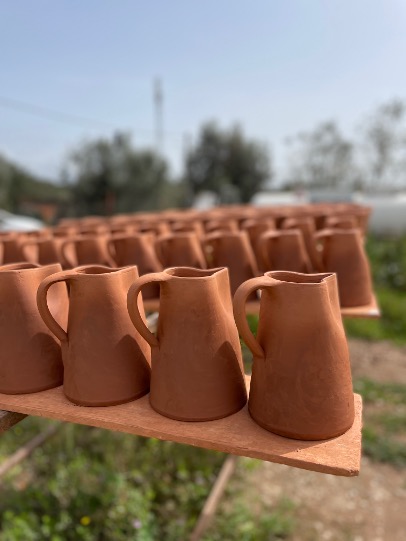
Next comes the open-air drying stage, a crucial phase in the ceramic process. During this period, the pieces are left to dry naturally in a controlled environment, allowing the moisture within the clay to evaporate slowly and evenly.

As the water content decreases, the clay begins to shrink, typically by around 10% of its initial size. The duration of this stage can vary significantly depending on the climate: it may take only a few hours during hot and dry summer conditions, while in more humid weather it can extend over several days.

This gradual drying process is essential to stabilize the structure of the pieces. It helps prevent deformation and reduces the risk of cracking caused by uneven moisture loss. At the same time, it provides an opportunity to observe the pottery closely and identify any potential weaknesses or structural fragility before moving on to the next stages of production.

Credits : alojadaceramica

#3 - Fine polishing, applying the engobe, and first firing

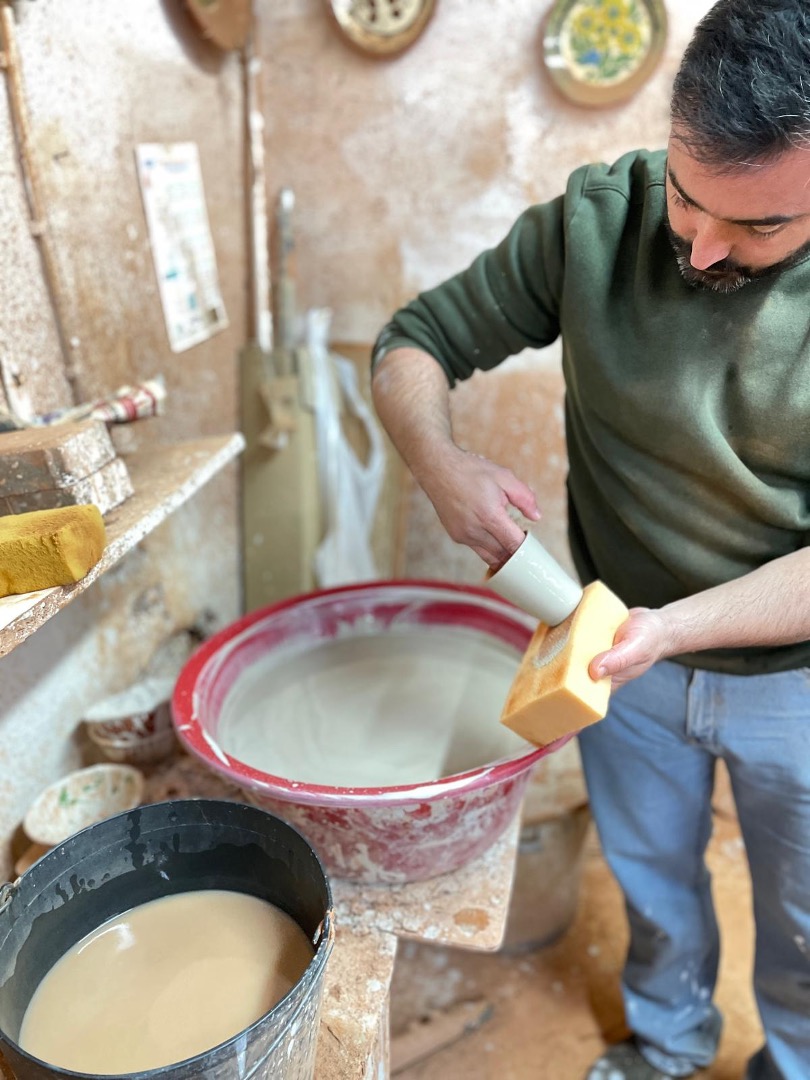
The process begins with fine polishing of the surface, which is essential to refine the texture and remove any imperfections left from shaping. This step ensures a smooth and even base, allowing for better adhesion and a more controlled finish in the following stages.

Once the surface is properly prepared, the engobe is carefully applied. This liquid clay mixture can be brushed, sprayed, or poured onto the piece, depending on the desired decorative effect. The consistency of the engobe must be well balanced to achieve an even coverage without cracking or flaking during drying.

After the engobe has been applied and allowed to dry gradually, the piece undergoes its first firing, often referred to as the bisque firing. This stage hardens the clay, stabilizes the applied engobe, and prepares the ceramic for any further decoration or glazing.

#4 - Painting

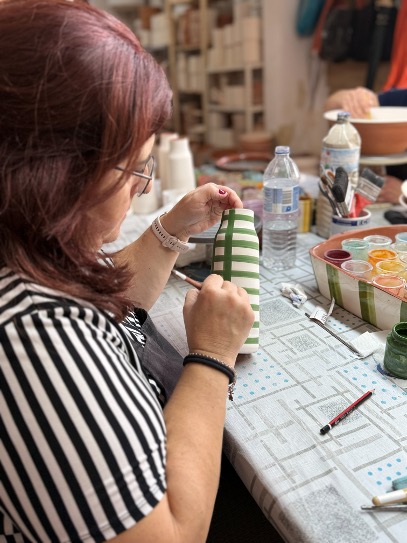
L'art de la peinture sur céramique repose sur un équilibre délicat entre tradition, créativité et savoir-faire artisanal. Chaque pièce raconte une histoire, qui prend vie grâce à un souci minutieux du détail et à un profond respect pour la matière.

Nos artisans portugais peignent à la main chaque motif avec précision et passion. En utilisant des techniques ancestrales transmises de génération en génération, ils créent des motifs allant des motifs classiques et traditionnels à des compositions géométriques audacieuses. Ces motifs sont souvent rehaussés de couleurs modernes et éclatantes, donnant naissance à des pièces à la fois intemporelles et contemporaines.

Chaque coup de pinceau est appliqué à la main, rendant chaque objet en céramique véritablement unique. Ce dévouement à l'artisanat manuel préserve non seulement un patrimoine artistique authentique, mais garantit également un niveau de qualité et d'individualité que les machines ne peuvent reproduire. Il en résulte un mélange harmonieux de tradition et d'innovation, où chaque création devient une œuvre d'art à part entière.


Credits : alojadaceramica

#5 - Glazing

Ceramic glazing is a crucial step in the creation of pottery, combining both science and artistry to transform a simple clay object into a finished, durable, and visually striking piece.

Glazing involves applying a liquid mixture—called glaze—onto the surface of a ceramic item. This glaze is typically made from minerals, silica, and metal oxides, which will react under high temperatures during firing. Once applied, the piece is placed in a kiln, where the intense heat causes the glaze to melt and fuse with the clay body.

As the glaze melts, it forms a thin, glass-like coating that serves several purposes. It makes the ceramic waterproof, strengthens the surface, and enhances its appearance. Depending on the composition of the glaze and the firing conditions, the final result can vary widely in color, texture, and finish—from glossy and smooth to matte..

In essence, glazing is what gives ceramic its final character, blending functionality with beauty and turning each piece into a finished work of art.

#6 - Final firing

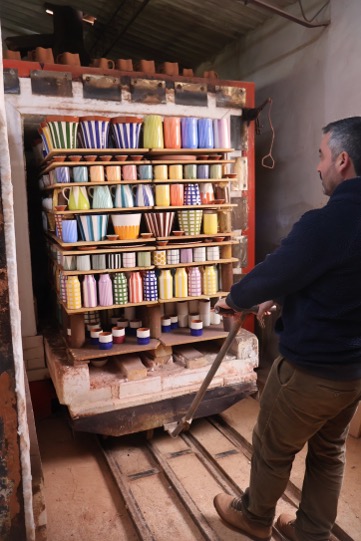
The final firing of ceramics after glazing, often called the glaze firing, is the last and most decisive stage in the ceramic-making process. It is during this step that the piece reaches its finished form, both technically and aesthetically.

Once the glaze has been applied and fully dried, the ceramic piece is carefully placed in a kiln for a second firing. The temperature is gradually increased, often reaching between 1000°C and 1300°C, depending on the type of clay and glaze used. This controlled heating process is essential to avoid cracks or defects.

As the temperature rises, the glaze begins to melt and transform into a հեղglass-like coating. It fuses with the surface of the ceramic, creating a smooth, sealed layer. At the same time, the clay body itself continues to strengthen and vitrify, becoming harder and more durable.

This stage is also where the final appearance of the piece is revealed. Colors intensify or change, finishes become glossy or matte, and subtle variations emerge due to the interaction between heat, glaze composition, and kiln atmosphere. Even slight differences in temperature or placement in the kiln can influence the outcome, making each piece unique.

After the firing cycle is complete, the kiln is left to cool slowly. This cooling phase is just as important as the heating, as it prevents thermal shock and ensures the stability of the glaze and the ceramic body.

In essence, the final firing is the moment when craftsmanship, technique, and material come together—transforming a glazed object into a finished ceramic piece with its full beauty and strength revealed.
Credits : alojadaceramica

#7 - Lovely pottery

The creation of ceramics at A Loja da Cerâmica follows a carefully crafted process that combines traditional know-how with artistic expression. Each piece goes through several essential stages, ensuring both quality and beauty from start to finish.